Recent Posts - page 17
-
Researchers Explains Coral Reef Bleaching

We now have a 2017 event, which is not quite as bad as 2016, but certainly worse than the first two events that we studied [in 1998 and 2002]. That is significant because it postpones any hope of recovery. The current bleaching occupies a different geographical footprint from last year, which is bad news because it means between last year and this year a much greater extent of the Great Barrier Reef has now been damaged. In 2017, the hot water was in the middle of the Great Barrier Reef, the central section; last year it was in the north.
-
Whalers Take 333 Minke Whales
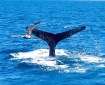
Japan intends to take nearly 4,000 whales over the next 12 years as part of its research program and has repeatedly said its ultimate goal is the resumption of commercial whaling.
-
California Sea Otters Amaze Observer

“What I saw next really surprised me. There was indeed a dead otter on the beach but there was another otter touching it with its nose and paws almost as if it was trying to revive the deceased otter. This continued for several minutes.”
-
New Study On Arctic Ice Melt

Arctic sea ice has been rapidly declining since satellites first started tracking it in 1979, and according to NASA, roughly 13.3 percent of the ice disappears every decade. Models have projected that manmade global warming would heat the Arctic faster than it would heat more temperate regions, and observation has borne that out. The Arctic is warming at least twice as fast as the rest of the globe, and the first two months of this year both had the lowest levels of sea ice on historical record.
-
Coral Reefs Face Extinction
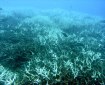
“To lose coral reefs is to fundamentally undermine the health of a very large proportion of the human race,” said Ruth Gates, director of the Hawaii Institute of Marine Biology
-
UN Launches Clean Seas Campaign
cientists say that the equivalent of a dump truck load of plastic is deposited in the world’s oceans every minute, and this quantity will only increase as consumption and population grow, too. By 2050, it’s said there will be more plastic than fish in the seas. The UN writes, “As many as 51 trillion microplastic particles – 500 times more than stars in our galaxy – litter our seas, seriously threatening marine wildlife.”
-
‘Decline in dissolved oxygen in oceans around the world

A large research synthesis, published in one of the world’s most influential scientific journals, has detected a decline in the amount of dissolved oxygen in oceans around the world — a long-predicted result of climate change that could have severe consequences… Read More ›
-
Pollution reaches the Mariana Trench

The amphipods were contaminated with PCBs — polychlorinated biphenyls — toxic chemicals used for decades in industry, as well as other industrial pollutants known as persistent organic pollutants.
“Every sample we had,” Jamieson says, “had contaminants in it at very high or extraordinarily high levels.”
-
‘Vaquitas will be extinct in a few years’
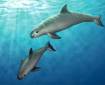
“The situation is completely out of control,” says Lorenzo Rojas-Bracho, a cetacean expert at the National Institute of Ecology and Climate Change in Ensenada, Mexico, and member of the International Committee for the Recovery of the Vaquita, an international advisory group to the Mexican government. “Of course, there’s a risk in capturing the vaquitas. But it’s clear now that they will be killed [in gillnets] anyway.”
-
Warming Seas Impact Alaskan Marine Ecosystem

Farther south, the Bering Sea has emerged as a hot spot for warming-water studies — almost literally. Sea-surface temperatures in the Bering reached 14 degrees Celsius last summer (57 degrees Fahrenheit) and were generally 3 degrees Celsius (5 degrees Fahrenheit) warmer than normal, scientists reported.
Featured Categories
Beach Rescue ›
-
Popular California Beach Covered in Trash
February 4, 2019
-
A “Ton” of Trash Removed on Coastal Cleanup Day
September 17, 2018
Climate Change ›
-
Is There Hope for Coral Reefs?
November 20, 2021
-
Why Are Gray Whales Dying Off?
August 10, 2021
Coral Reefs ›
-
Great Barrier Reef Still Struggles for Health
April 4, 2019
-
Marine Heat Waves Now More Frequent
March 5, 2019
Entangled Marine Mammals ›
-
Air Guns Threaten Right Whale Extinction
March 6, 2020
-
Warming Oceans Increasing Whale Entanglements
January 29, 2020
Fisheries ›
-
How Industrial Fishing Changed the Oceans
November 23, 2021
-
Biden Says Fishing Practices Must Change to Protect the Endangered Right Whale
May 28, 2021
Ghost Nets ›
-
Ghost Gear Remains Major Ocean Polluter
November 7, 2019
-
Ghost Nets & Gear Remain An Entanglement Cause
February 9, 2018
Marine Mammal Rescue ›
-
“Drastic” Dolphin Strandings in So Cal
February 26, 2019
-
Lerptospirosis Outbreak among Calif Sea Lions
October 17, 2018
Microplastics in Ocean ›
-
Research Shows Fish Feasting on Plastic
March 11, 2021
-
Can These Tools Collect Microplastics?
February 20, 2021
North Pacific Gyre ›
-
Stairway to Plastisphere
November 5, 2013
-
Update of the Plastisphere on So. Alaskan Beaches
July 17, 2013
Ocean acidification ›
-
A 25% Carbon Dioxide Increase Threatens Gulf of Mexico
August 12, 2020
-
Dungeness Crab Impacted by Acidification
January 29, 2020
Pesticides ›
-
Environmental Crisis on Russian Pacific Coast
October 11, 2020
-
Salmon Impacting Pesticides Kept on Market by New EPA
January 15, 2018
Plastic Pollution ›
-
Plastics in the Sea Continue Impacting Sea Life
November 21, 2020
-
High Concentrations of Microplastics in Deep Sea Sediment.
May 1, 2020
Saving the Oceans ›
-
United Effort by 200 Countries to Halt Plastic Pollution
December 7, 2017
-
6 Ways to Teach Kids about Single-Use Plastic
July 3, 2017
Seabirds ›
-
A Sea Bird Dead Zone
January 17, 2020
-
“…something’s off-kilter around the Bering Strait…”
April 15, 2019
Seismic Testing ›
-
Arctic National Wildlife Refuge Seismic Surveys Back on Track
October 26, 2020
-
Airgun Blasts Set for Alaska–Endangering Beluga Whales
October 9, 2019
Sewage Pollution ›
-
Nitrite Pollution Increase in Ocean Water
May 2, 2017
-
Massive Algae Bloom on Lake Erie
November 11, 2015
Spirituality and Nature ›
-
Our Ocean Connection: The Challenges, The Cures
September 18, 2018
-
Join in International Coastal Cleanup Day
September 9, 2018
Sustainable Seafood ›
-
MPAs Could Help Oceans Recover
April 6, 2020
-
Federal Fisheries Managers Ordered to Re-issue Gillnet Regulations
October 29, 2018
Thoughts ›
-
With Ocean Changes, So Will We
May 22, 2018
-
U.S. Federal Budget Not Dolphin Friendly
June 21, 2017
Trash Gyre ›
-
Microplastics Swarm Oregon Beach
March 5, 2015
-
Plastic Waste Returns Home on Kelp
March 19, 2014
Whales ›
-
New Whale Species Found That’s ‘Critically Endangered’
January 29, 2021
-
How Wildfire Smoke May Harm Whales & Dolphins
October 1, 2020
 Neptune 911!