Environment

Marine Monuments Remain at Risk

The three-million-acre monument was designated in September 2016 by former-president Barrack Obama under authority granted by the 1906 Antiquities Act. Since then, commercial fishing, with the exception of lobster and red crab fishing, has been banned within the monuments boundaries. 

In Zinke’s report, he recommends the authority for regulating fishing in the area be returned to the New England Fishery Management Council, which was established under the 1976 Magnuson-Stevens Fishery Conservation and Management Act. 

“Lowest numbers of cod on record”

“Across the United States, changes in our climate and our oceans are having very real and profound effects on communities, businesses, and the natural resources we depend on — including our economically valuable fisheries …” declared a NOAA Fisheries webpage updated in June. “Understanding these changes and measuring their impacts is an important part of NOAA Fisheries’ mission.”

Conquering Marine Debris

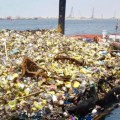
Thousands upon thousands of volunteers combed coastal regions and waterways on International Coastal Cleanup Day for trash and waste removal.  These photos by Charmaine Coimbra were taken at Estero Bluffs State Park, with volunteers from the Cayucos Land Conservancy in cooperation with the local coordinating agency, ECOSLO.

Join the World In Coastal Clean-Up Sat., Sept. 16

The first California coast cleanup began in the mid 1970s when an Arcata recycler operated beach cleanups in search of recyclables. Oregon, however, was the first state to organize a state-wide volunteer beach cleanup in 1984, called the “Plague of Plastics.”
The California Coastal Commission began the California Coastal Cleanup in 1985. From 1985 through 2016, 23,054,067 pounds of trash and recyclables were removed and properly disposed or recycled by 1,437, 549 volunteers, the commission reports.