Neptune 911 will be on holiday through early 2016. We would like to leave this year with the good news and the news that asks us to work harder for our seas, put together by David Helvarg who heads the… Read More ›
Neptune 911 will be on holiday through early 2016. We would like to leave this year with the good news and the news that asks us to work harder for our seas, put together by David Helvarg who heads the… Read More ›
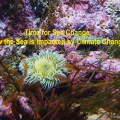
Tropical coral reefs cover less than 1% of the ocean, but they are home and nursery to 25% of all marine species; billions of fish, mollusks and other creatures rely on reefs for their food and shelter. Their wonder and beauty generates needed tourism dollars for many poor nations, and they act as natural barriers providing storm surge protection for many millions of coastal residents.

David Lusseau, senior lecturer in Marine Top Predator Biology at the University of Aberdeen, told IBTimes UK this does appear to be the largest whale stranding for any type of baleen whales. He said: “I do not know of other events with such large numbers of individuals involved. Seeing multiple sei whales stranded together in clusters is beyond the ordinary.”

“This El Nino is building up to be quite a doozy, but we also have a series of other changes going on,” said Steve Palumbi, director of the Hopkins Marine Station at Stanford University. “We are having changes in wind patterns, changes in upwellings along the coast. It’s like your whole basic ecosystem is being shifted around in different ways.”

Two cold winters have given the gulf some breathing space, but climate models and recorded trends indicate our seas are going to keep warming, with the conditions experienced in the “ocean heat wave” becoming the new normal by mid-century. The result will be dramatic changes in an ecosystem Mainers have relied on since the end of the last ice age, ones for which our communities, industries and government are poorly prepared to face.

“We are seeing starvation, these birds are emaciated,” says Senior Environmental Scientist John Thompson, Department of Fish and Wildlife.
Thompson claims it is the changing weather pattern with El Niño conditions and the boost in ocean temperatures.

“Overall, we found there’s a decrease in species diversity and abundance irrespective of what ecosystem we are looking at. These are broad scale impacts, made worse when you combine the effect of warming with acidification.

A new global review led by the University of Exeter that set out to investigate the hazards of marine plastic pollution has warned that all seven species of marine turtles can ingest or become entangled in the discarded debris that… Read More ›

According to a 2013 study, marine species are pushing their range boundaries poleward, away from the Equator, at an average speed of 4.5 miles a year. That’s 10 times as faster as the speed at which species on land are moving.
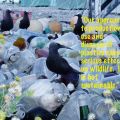
Far away from California’s coast, where the Pacific Ocean currents swirl, the blue of the sea was replaced by fishing nets, buckets, buoys, laundry baskets and unidentifiable pieces of plastic that floated past the Ocean Star, a ship carrying a… Read More ›
 Neptune 911!