http://theconversation.com/the-oceans-are-full-of-our-plastic-heres-what-we-can-do-about-it-31460

“Every beach surveyed we found beach litter on. Northumbria University sampled a random litre of sand and found over ten thousand microscopic plastic particles present. Litter is being found consistently in sea bed surveys – all the way out as far out as the continental shelf – over a million seabirds and a hundred thousand sea mammals will die every year from ingestion and entanglement. We need to reduce the amount of marine litter by 50%.”

Editor’s Note: Captain Charles Moore recently completed the most recent research tour “Gyre Voyage 2014.” The following is a reduced version of the blog Captain Moore posted August 15, 2014. To read the entire blog click this link: Final Blog… Read More ›
By HANNAH LANDERS A group of K-12 teachers stepped off a skiff onto the southern tip of Tybee Island on Tuesday morning. Slathered in sunblock and carrying large plastic buckets, they weaved through lounging beachgoers and shouting children, sifting sand… Read More ›
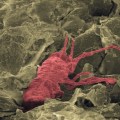
We know that Australia’s waters contain lots of tiny pieces of plastic, and that these pieces can harm many marine species. But in new research published today we show that these microplastics are also home to marine life, some of… Read More ›

Jun 18, 2014 Issues: Environment WASHINGTON, D.C. – Today, Congressman Frank Pallone, Jr. (D-NJ) introduced legislation, the Microbead-Free Waters Act of 2014, that would prohibit the sale or distribution of personal care products that contain synthetic plastic microbeads. These small… Read More ›

“Marine debris casts its ominous shadow and threatens to break the virtuous circle which would otherwise guarantee sustainable livelihoods and incentives to protect wildlife.”

The majority of the pieces, 54 percent, were rayon, a manmade material created out of cellulose and used to make clothing, cigarette butts, disposable diapers and other personal-hygiene products, among other consumer goods. The rest were pieces of various other types of polymers — polyester, nylon, polypropylene, polystyrene, acrylic and polyethylene. Identifying the tiny pieces fell largely to Thompson, whose research has focused on marine debris, Obbard said.

Story by Charmaine Coimbra The diminutive Dr. Chelsea Rochman shared a big fish story. She reeled in tiny Japanese medaka (Oryzias latipes) for research, and landed big results–results that could change the way we consume and what we eat. She calls it “the… Read More ›
New management is needed for the planet’s most important common resource Feb 22nd 2014 | From the print edition The Economist IN 1968 an American ecologist, Garrett Hardin, published an article entitled “The Tragedy of the Commons”. He argued… Read More ›
 Neptune 911!