BY JULIET EILPERIN June 17 at 12:01 AM President Obama on Tuesday will announce his intent to make a broad swath of the central Pacific Ocean off-limits to fishing, energy exploration and other activities, according to senior White House officials…. Read More ›
Year: 2014
30 Minke Whales Victims of Japan’s New Hunt
June 13, 2014 Japan has caught 30 minke whales in its first hunt since the International Court of Justice ordered the halt of its annual expedition in the Antarctic. A report by the Japanese Fisheries Agency said that 30 minke… Read More ›
Most Polluted Oceans Named
IBTimes UK looks at the most polluted oceans areas and seas in the world. Atlantic Ocean – Gulf of Mexico Dead Zone The Gulf of Mexico is a basin in the Atlantic Ocean, surrounded by the gulf coast of the… Read More ›
About World Oceans Day, June 8, 2014
Why Should I Celebrate World Oceans Day? The world’s ocean: Generates most of the oxygen we breathe Helps feed us Regulates our climate Cleans the water we drink Offers a pharmacopoeia of potential medicines Provides limitless inspiration! Now each of… Read More ›
Marine Debris–A Growing Planetary Threat
“Marine debris casts its ominous shadow and threatens to break the virtuous circle which would otherwise guarantee sustainable livelihoods and incentives to protect wildlife.”
Acidic Oceans and the Lobster, Scallop, & Crab Industry
Today, experts predict pH declines in the world’s oceans of .4 units by the end of this century—a mere 85 years from now.
The oceans absorb over a quarter of the carbon dioxide in the atmosphere. The more we pollute, the more they absorb, and the more acidic they become. It’s unlikely that some marine life that we depend on will be able to adapt to a rate of acidification that is over ten times as fast as during the PETM.
Microplastics Invade Arctic Ice
The majority of the pieces, 54 percent, were rayon, a manmade material created out of cellulose and used to make clothing, cigarette butts, disposable diapers and other personal-hygiene products, among other consumer goods. The rest were pieces of various other types of polymers — polyester, nylon, polypropylene, polystyrene, acrylic and polyethylene. Identifying the tiny pieces fell largely to Thompson, whose research has focused on marine debris, Obbard said.
Saving Coral Reefs With Tradition & Science
Editor’s Note: The focus of Neptune 911 is about our oceans’ cry for help. While the following story is a pitch to raise funds by a group of researchers, it is also a response to that cry for help. The… Read More ›
Research To Add Oxygen to Dead Zones
May 19, 2014 CORVALLIS, Ore. – A new study examining the impact of iron released from continental margin sediments has documented a natural limiting switch that may keep these ocean systems from developing a runaway feedback loop that could lead… Read More ›
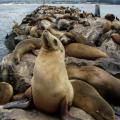
Editor’s Note: Another unusual rash of marine mammals have beached themselves requiring rescue operations along the Pacific coastline. Along the north coast of California, the Marine Mammal Center in Sausalito, reports 429 pinniped rescues as of early May 2014,… Read More ›